With the advancement of power semiconductors, with the iterative upgrades of MEMS microdevices and precision ceramic packaging technologies, ceramic substrates such as alumina and aluminum nitride, thanks to their excellent insulation, high thermal conductivity, outstanding thermal stability, and reliable mechanical strength, have become core substrate materials for high-end electronic devices, power modules, and RF sensing equipment. As the core steps for ceramic substrate metallization, micropattern fabrication, and precision circuit processing, photolithography directly determines the accuracy and yield of subsequent exposure, development, etching, and electroplating processes. It is a key link to ensure the miniaturization, high precision, and high reliability of ceramic devices.
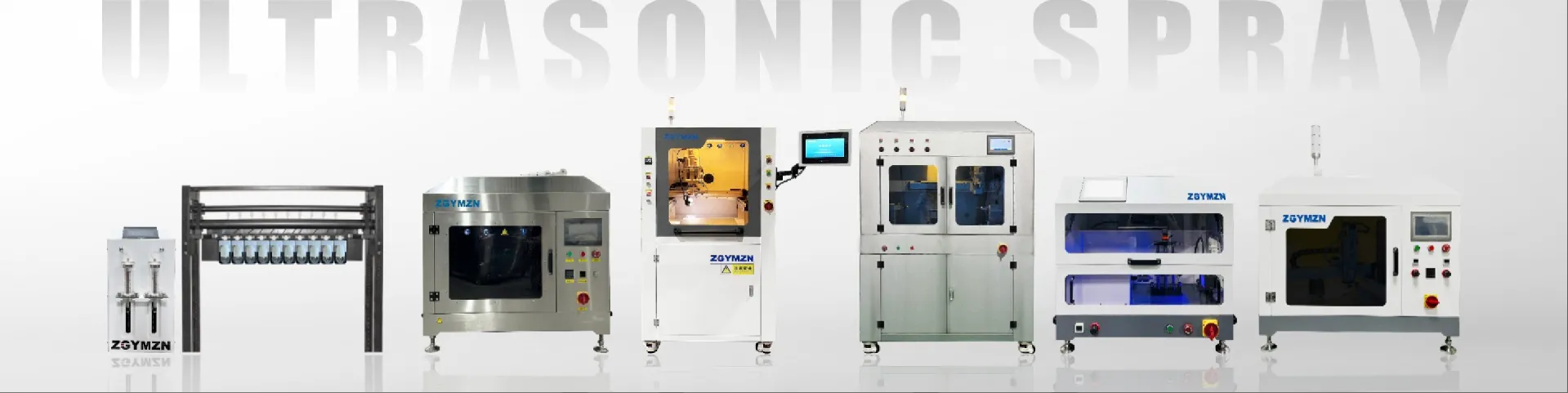
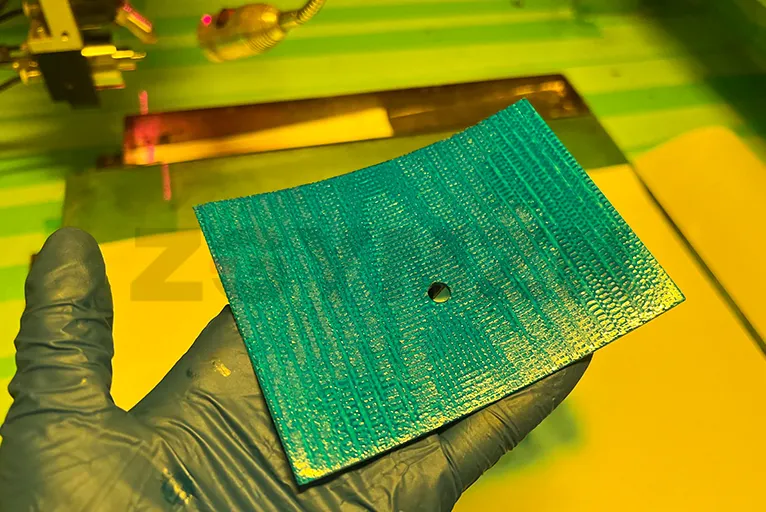
Ultrasonic spraying technology atomizes photoresist into micron-level uniform fine droplets, depositing them gently at low speed onto the ceramic substrate surface, perfectly avoiding the drawbacks of traditional coating processes. It offers outstanding advantages such as strong film thickness controllability, high coating uniformity, excellent three-dimensional structure coating effect, high material utilization, and no substrate damage. It can effectively meet the photoresist coating needs of flat, irregularly shaped, and structured ceramic workpieces, significantly improving the precision and production yield of ceramic micro-nano pattern machining and reducing production costs.
Common Problems and Solutions
1、Coffee-ring patterns with uneven thickness
Raise the substrate preheating temperature, slightly lower carrier gas pressure, slow down the movement speed, and use multi-layer thin spraying;
2、The side wall adhesive layer is too thin
Reduce spraying distance and increase droplet supply flow rate;
3、Poor coating adhesion and peeling
Enhance plasma activation and optimize the heating curve;
The standardization of ultrasonic sprayed photoresist addresses common issues in actual production such as uneven film thickness, insufficient adhesion, incomplete structural coating, and poor process stability. Combining the characteristics of ceramic substrate materials, photoresist physicochemical parameters, and ultrasonic spraying equipment process principles, this complete process plan is developed to provide professional and practical technical references and parameter bases for industrial batch production and laboratory precision sample processing.